Ledger Live: Discover Section and Ecosystem Apps
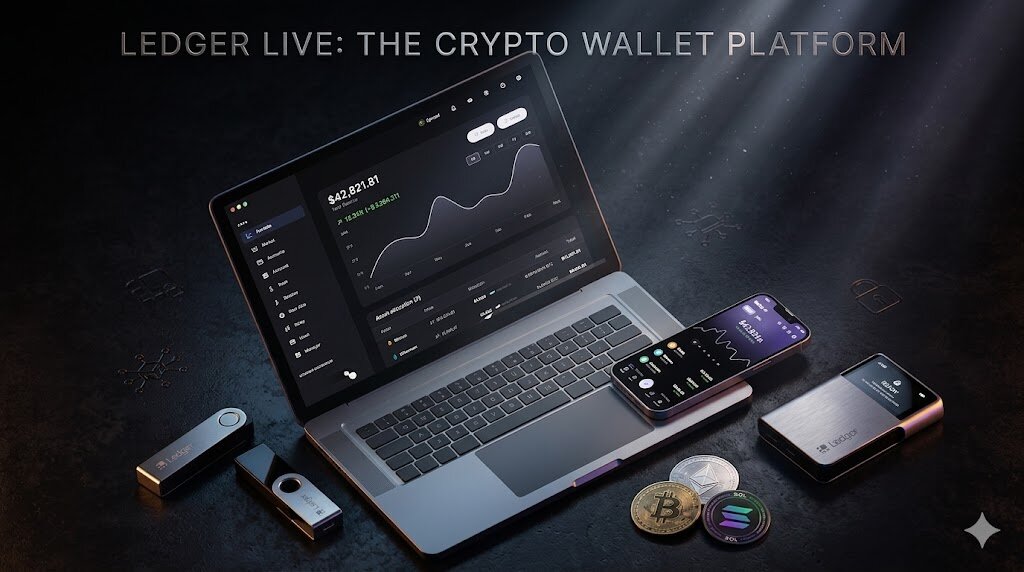
What the Discover Section Actually Is
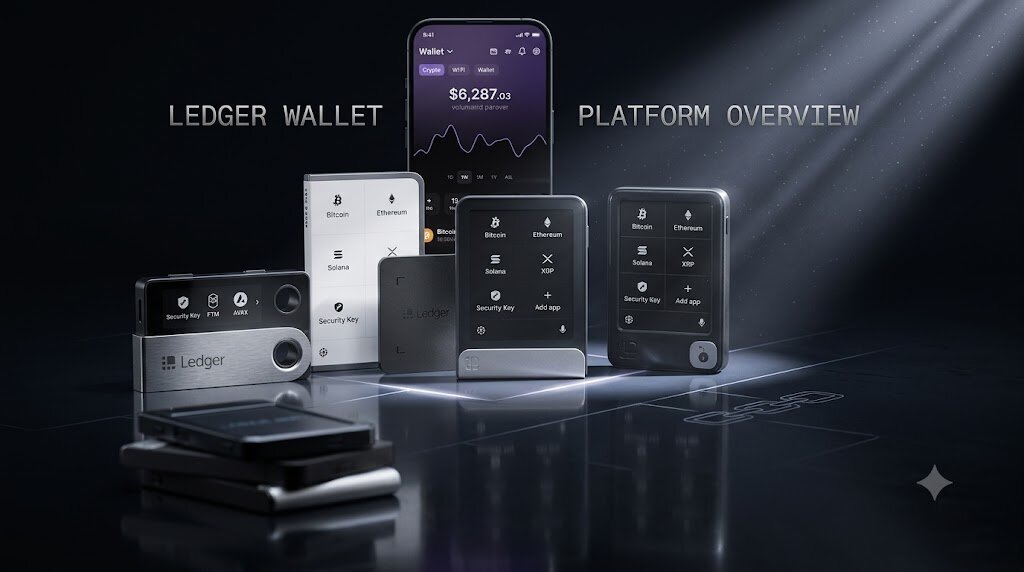
Position Within the Ledger Live App Discover appears as a distinct section within the wallet interface, accessible through the main navigation. Users open the section and find a browsable catalog of applications organized by category. Selecting any listed application opens either an in-app experience or a bridge to the external application through WalletConnect. The section does not replace the broader Web3 experience. Users still visit external websites directly when they want. They still connect through WalletConnect to applications not featured in Discover. The section adds a curated entry point without limiting other access methods. Interface conventions match the rest of the Ledger Live app. Navigation feels consistent with account management, portfolio views, and other sections. Users familiar with the broader wallet interface find Discover follows patterns they already know rather than introducing new interaction models.
Curation Rather Than Marketplace Discover functions as a curated list, not a marketplace. No transactions happen between Ledger and application providers to determine inclusion. No pay-to-play arrangements exist. Applications appear based on evaluation of their fitness for inclusion rather than commercial deals. This curation matters because it shapes what users find. A marketplace model would include applications willing to pay for placement regardless of quality. The curation model attempts
to include applications based on utility and safety, even if this means excluding some applications that might otherwise pay for listing. Curation involves subjective judgment. Not every user agrees with every inclusion or exclusion decision. Some argue for stricter curation. Others argue for broader inclusion. The current state represents specific choices about balancing these considerations, and the choices evolve as the crypto ecosystem itself evolves.
Categories of Apps Available in Ledger Live Wallet Discover

DeFi Protocols and Lending Decentralized finance applications form a substantial portion of Discover offerings. Lending protocols where users can supply assets to earn yield. Borrowing protocols for taking loans against crypto collateral. Yield aggregators that automate strategies across multiple underlying protocols. Specific protocols featured vary based on current integrations and evaluations. Aave and Compound have historically appeared for lending. Various yield-focused applications rotate through inclusion. Newer DeFi protocols get evaluated for potential addition as they mature. DeFi applications through Discover typically maintain the same security model as direct access. Users still authorize transactions through the connected hardware device. The
Discover section provides convenient entry rather than changing the underlying security architecture that DeFi participation involves.
NFT Marketplaces NFT-focused applications appear alongside DeFi protocols in Discover. Marketplaces where users can buy, sell, and browse NFT collections. Specific integrations vary based on current evaluations and marketplace ecosystem changes. OpenSea historically appeared as the primary NFT marketplace option. Other marketplaces have joined or left the featured list over time as the NFT space evolved. Users primarily focused on NFTs check current Discover offerings rather than assuming any specific marketplace remains available at any given moment. Some marketplace integrations provide meaningful in-app experiences. Others link to external websites where users complete transactions through WalletConnect. The difference affects daily workflow but not fundamental security properties.
Educational and News Resources Beyond transactional applications, Discover sometimes includes educational and news resources. Content platforms for crypto learning. News aggregators for staying current on market developments. Portfolio analysis tools that complement the native portfolio view. Non-transactional resources make Discover useful beyond just direct application access. Users treating crypto as a serious ongoing interest benefit from staying informed, and Discover can serve as a launching pad for that broader engagement rather than exclusively a transaction interface. Content quality across educational and news resources varies. Not everything featured represents the same level of authority. Users should apply their own judgment to information consumed through Discover recommendations rather than treating inclusion as endorsement of specific claims made through featured resources.
How Ecosystem Apps Get Reviewed for Inclusion
Security Evaluation Process Security review represents the first evaluation gate. Applications with known vulnerabilities, active security incidents, or fundamental design problems do not receive inclusion. The evaluation examines both the application itself and the underlying protocols it depends on. Security audits from reputable firms weigh heavily in evaluation. Applications with recent audits from established security firms present less risk than applications without such audits. Some applications maintain multiple audits over their history, which provides additional confidence about ongoing security attention. Not every security issue disqualifies applications immediately. Applications with known but mitigated vulnerabilities sometimes remain listed if the mitigations effectively address the concerns. The evaluation involves judgment about whether specific issues create meaningful user risk in practice.
Protocol Maturity Requirements Beyond security, protocols need to demonstrate maturity before Discover inclusion. Extremely new protocols with limited operational history do not typically qualify regardless of theoretical merit. Time provides evidence about actual behavior that theoretical analysis cannot fully substitute for. Total value locked, user counts, and transaction volumes provide indicators of protocol maturity. High values suggest widespread evaluation by users voting with their assets. Low
values on protocols claiming significant capabilities warrant additional skepticism about actual delivery versus marketing claims. Development team characteristics factor into maturity evaluation. Teams with established reputations from prior projects have track records that anonymous teams lack. Not every anonymous team represents risk, but the lack of accountability shapes overall risk assessment.
Ongoing Monitoring After Listing Discover inclusion does not represent a one-time evaluation frozen in place. Applications get monitored after listing for continued fitness. Security incidents, protocol changes, or shifts in operational status can trigger reevaluation and potential removal. Applications removed from Discover do not necessarily indicate active problems. Sometimes applications simply shift focus or reduce active support to levels that no longer justify featured placement. Users noticing removed applications can research the specific reasons if the information affects their usage decisions. Ongoing monitoring resource commitment shapes what applications can realistically be included. Adding applications creates ongoing evaluation obligations. This constraint keeps Discover selective rather than including every application that might theoretically qualify at any given moment.
Interacting With Discover Section Apps

Direct In-App Access Some Discover applications integrate directly into the wallet interface. Users interact with these applications without leaving the Ledger Live app. Portfolio views, transaction preparation, and other application-specific functionality happen inline rather than requiring external website visits. Direct integration provides the tightest user experience. No context switching between the wallet and external browsers. No connection management for WalletConnect sessions. Users work within familiar wallet interface patterns while accessing external protocol functionality. Not every Discover application supports direct integration. Some applications provide too much functionality for full in-app implementation. Others technically permit integration but have not received the integration work necessary to enable it. Direct integration remains a subset of overall Discover offerings rather than universal.
WalletConnect Fallback Options Applications without direct integration use WalletConnect as the bridge between the wallet and external interfaces. Users open the application in a browser and connect their Ledger through the WalletConnect flow initiated from Discover. WalletConnect through Discover works similarly to WalletConnect from anywhere else. The initial connection creates an encrypted channel. Subsequent transaction requests route through this channel to the wallet for signing. The Discover entry point simplifies finding the application while the connection mechanics remain standard. Session management applies. Long-running WalletConnect sessions with applications discovered through the section persist similarly to other sessions. Users should end sessions when done with specific applications rather than leaving connections active indefinitely.
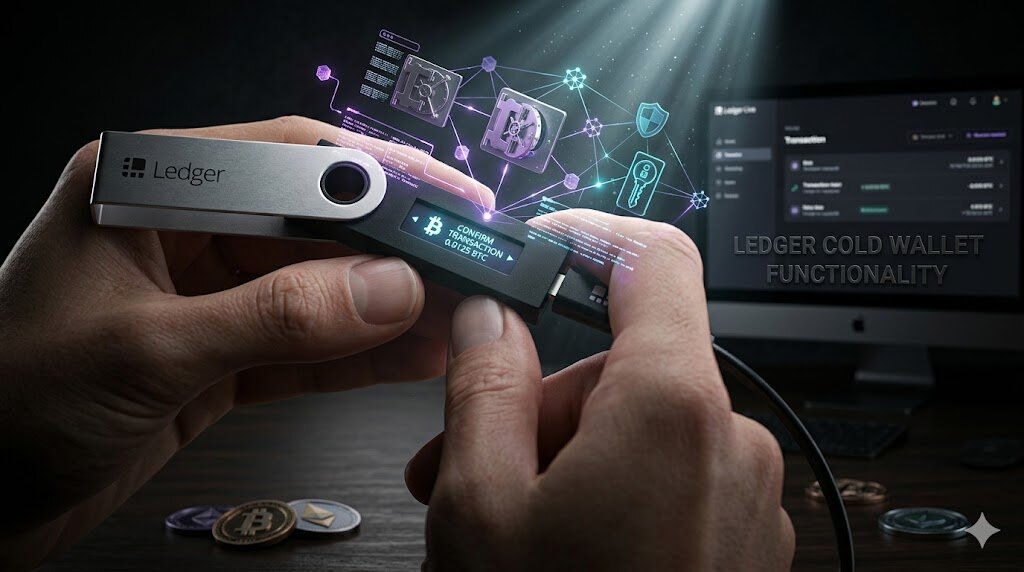
Transaction Signing Through Discover Whether applications access Discover through direct integration or WalletConnect, transaction signing always happens through the connected hardware device. This consistency applies across all methods of interacting with any Discover application. Users see transaction details on the device screen for verification before authorization. Clear signing decodes contract interactions when possible, showing human-readable descriptions of what the transaction actually does. Blind signing remains necessary for transactions that exceed device decoding capabilities, though these situations require additional user vigilance. The dual verification model applies. Ledger Live app shows what the transaction should do based on the application context. The device shows what the transaction actually contains as it will be signed. Comparing these two views catches manipulation between application intent and actual signing.
Discover Feature
User Benefit
Trade-Off
Curated app list
Reduced risk of scam apps
Not every legitimate app included
Security pre-evaluation
Basic safety check done
Not comprehensive audit substitute
Direct in-app access
Smoother workflows
Only for some applications
WalletConnect fallback
Broad application coverage
Additional connection steps
Category organization Easier discovery
Category boundaries sometimes fuzzy
Hardware signing
Consistent security model
Signing steps still required
Ongoing monitoring
Removals if problems emerge
Delisted apps still exist externally
Cross-chain apps
Multi-network utility
Complexity varies by application
Trade-Offs of Using Discover Versus External Access
Advantages of Curated Access
Reduced risk of interacting with scam applications provides the primary Discover advantage. Users navigating the broader Web3 ecosystem independently sometimes fall for lookalike sites, malicious applications, or protocols designed to steal funds. Curated inclusion reduces this risk by pre-filtering options. Convenience factors also favor Discover. Finding applications through browsing rather than searching. Standardized connection flows within familiar interface patterns. Consistent transaction signing workflows across different applications. Users new to crypto benefit most from curated access. Experienced users developed judgment for evaluating applications independently. Newcomers lack this judgment and face higher risks navigating raw Web3 alternatives. Discover provides safer entry points for users still developing their own evaluation capabilities.
Limitations Users Sometimes Encounter Not every application appears in Discover. Users needing access to specific applications outside the featured list must use external access methods regardless of whether Discover would have been more convenient. The curated list does not attempt to cover every possible use case. Feature parity between direct application access and Discover-mediated access sometimes differs. Applications occasionally provide features through their native interfaces that Discover integrations do not surface. Users needing full feature access sometimes prefer external access to capture capabilities that in-app experiences do not include. Discovery lag affects users interested in cutting-edge applications. New protocols and applications need time to build track records before qualifying for Discover inclusion. Users wanting immediate access to just-launched protocols cannot wait for evaluation cycles and must rely on external channels instead. Common activities users engage in through the Discover section include the following: 1. Browsing available applications when exploring new use cases 2. Accessing lending protocols to supply or borrow assets 3. Participating in staking through supported validators 4. Trading on decentralized exchanges through featured platforms 5. Buying and selling NFTs through integrated marketplaces 6. Reading educational content about crypto concepts and protocols 7. Following news and market analysis from featured resources 8. Discovering new applications through category browsing